

Every year, during the first week of June, Amsterdam Mental Health Awareness Week brings together organisations, residents, professionals, and community initiatives to promote mental wellbeing, connection, inclusion, and accessible conversations around mental health. Across the city, activities encourage people to reflect on the importance of emotional wellbeing, healthy relationships, community belonging, and preventive care.
This year, Road of Hope anticipated a bit the calendar and proudly contributed to the initiative through three meaningful community activities focused on parenting support, social connection, and mental wellbeing among culturally diverse communities in Amsterdam.
Supporting Newcomer Parents Through the Mothers Project
As part of the Mothers Project, Road of Hope organised two interactive workshops titled “The Impact of Screen Time in Young Children”, focused on supporting newcomer parents navigating modern parenting challenges in a new cultural context.
The first workshop took place on May 18, 2026, in partnership with Project Eruna, Beles Talent Hub, Vrouw en Vaart, and Thamarat. The session gathered seven Eritrean parents (six fathers and one mother) for an open and engaging conversation about healthy parenting practices and the effects of excessive screen time on young children.
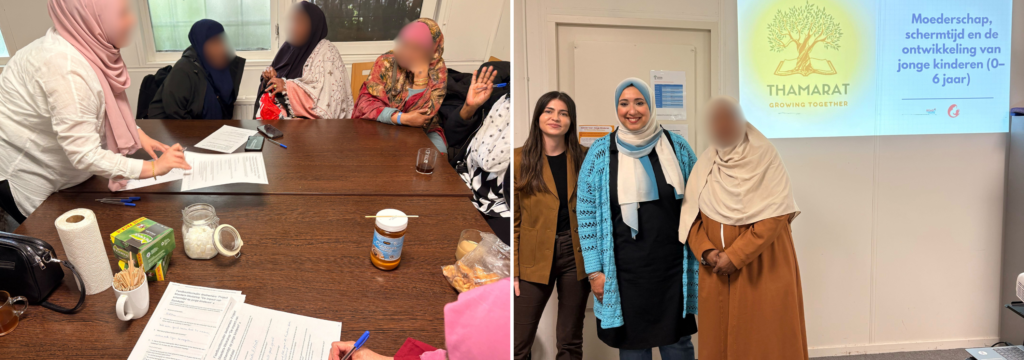
Facilitated by Yara Gamal, volunteer and partner of Road of Hope, with support from the project coordinator Andreea Alexandru, the workshop explored how inappropriate use of modern devices such as televisions, tablets, and mobile phones can affect children’s brain and eye development, attention span, emotional regulation, and dopamine balance. Parents were introduced to Dutch guidelines regarding screen time for young children, as well as practical tools, filters, and educational resources to help create healthier digital habits at home.
The session also included reflective exercises about parenting styles, family upbringing, and the desire to build healthier relationships with children. Participants discussed what they appreciated or struggled with in their own childhood experiences and how they hope to parent differently.
One particularly appreciated moment was the introduction of an educational card game inspired by the children’s cartoon Paw Patrol, encouraging parents and children to play together while reducing screen dependency.
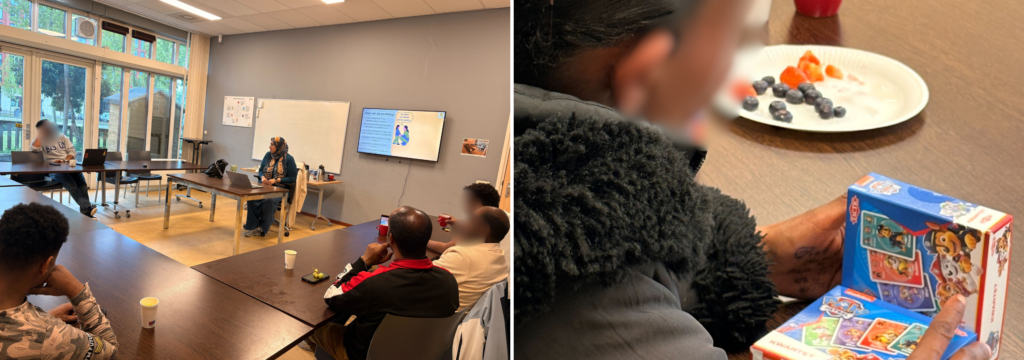
The participants were highly engaged throughout the workshop, with several fathers recording parts of the presentation to later share with their wives at home.
“I have many children, small and big, and they are all addicted to the phones,” one father shared openly.
Another participant reflected:
“I want to give my children more boundaries, but in a nicer way, not what I received from my parents.”
Workshop facilitator Yara Gamal highlighted the importance of emotional safety within parenting:
“As parents, we want to protect, but we cannot control our children. Our aim is to communicate and build a safe environment so children trust us and open up about mistakes without fear.”
A second edition of the workshop was held on May 19, 2026, in partnership with SomAstel, focusing on Somali mothers living in Amsterdam. The activity welcomed 20 participants and created a safe and supportive environment for women to reflect on motherhood, parenting challenges, cultural transitions, and personal growth.
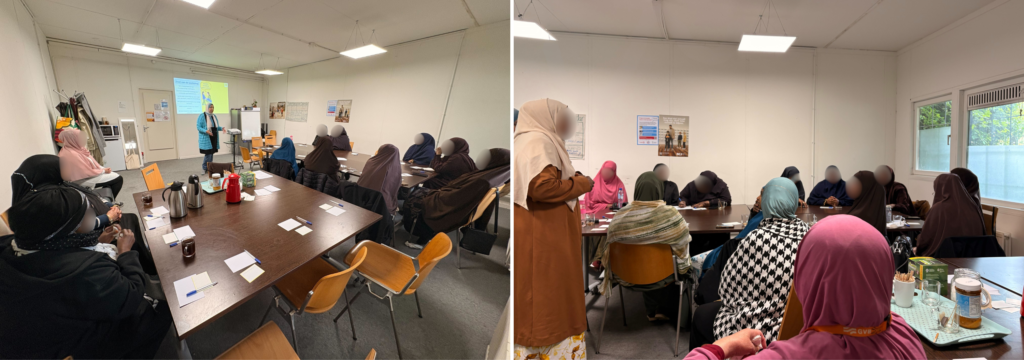
Participants reflected deeply on the balance between preserving cultural values and adapting to new parenting knowledge and realities in Dutch society.
“I discovered so many new things in the Netherlands. We are also growing as parents,” shared Raha, director of SomAstel and workshop translator/facilitator. “I learned that reading to babies is very beneficial, which is not what I expected. I thought they were too small for books. We are growing alongside our children.”
Yara Gamal also emphasised:
“Basic care is just the beginning of our responsibilities as parents. We need to ensure emotional care as well. Our job is to teach, explain, clarify, and guide, not only discipline.”
One young Somali mother reflected on emotional regulation and public parenting pressure:
“I learned in time not to be so afraid of other parents judging me when my child was emotional. I learned it was ok and normal for them to be emotional. I learned to communicate better with my children in these moments.”
Another participant shared the challenges faced by large families:
“Sometimes it is hard to create healthy routines for the younger children. We are busy moms with big families. The young kids want to behave like older children, and it is hard for them to understand why they cannot use a phone or watch TV like their older siblings.”
Through these workshops, Road of Hope aimed not only to share practical parenting tools, but also to strengthen confidence, emotional awareness, and community support among newcomer families.
The Mothers Project currently continues with the course Motherhood Across Cultures, taking place during May and June 2026 at Vrouw en Vaart, where women from diverse backgrounds continue learning, sharing experiences, and growing together in their parenting journeys.
Gardening, Community, and Mental Wellbeing in Slotervaart
On June 3, 2026, Road of Hope also organised a community gardening activity and dinner in Slotervaart as part of Amsterdam Mental Health Awareness Week.
In partnership with Samen Wonen Samen Leven/Ru Pare, Thrive Amsterdam, and the Effe Buurten initiative, the activity aimed to encourage residents to spend time outdoors, connect with others through gardening, and promote awareness about mental health in an accessible and community-oriented way.
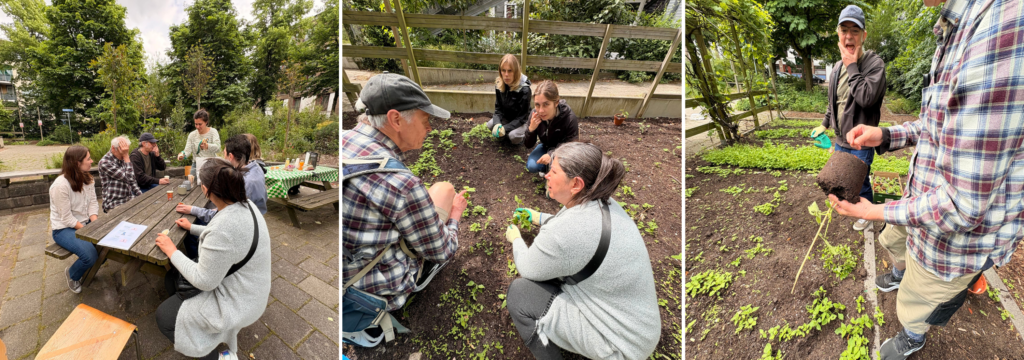
The event took place at the Ru Pare garden, a vibrant community space that produces fresh vegetables and herbs used for neighbourhood lunches and community dinners throughout the year.
The afternoon began with mindfulness and grounding exercises designed to help participants slow down and reconnect with the present moment. One exercise focused on box breathing, a technique that helps calm the nervous system and shift the body from stress mode into a more restful state. Another grounding exercise invited participants to engage intentionally with their senses , observing colours, textures, sounds, smells, and sensations within the garden environment.
The rich sensory experience of the garden created the perfect setting for reflection, relaxation, and social connection.
Afterwards, participants worked together to remove weeds, prepare the soil, and plant tomatoes, basil, and parsley.
The activity gathered ten participants from diverse backgrounds, including Dutch, Turkish, Syrian, Polish, and Mexican residents. Some were already part of the Ru Pare Gardening Club, while others joined for the first time, looking for connection, purpose, and community.
Alongside the gardening activities, participants also received accessible information and handouts about mental health and available local resources.
By combining nature, community engagement, and meaningful conversations, the event highlighted how simple shared activities can positively impact emotional wellbeing and social inclusion.
Through both the Mothers Project workshops and the gardening initiative, Road of Hope continues to create welcoming spaces where people from different cultures and backgrounds can connect, learn, support one another, and strengthen mental wellbeing together.