By Rik Moors
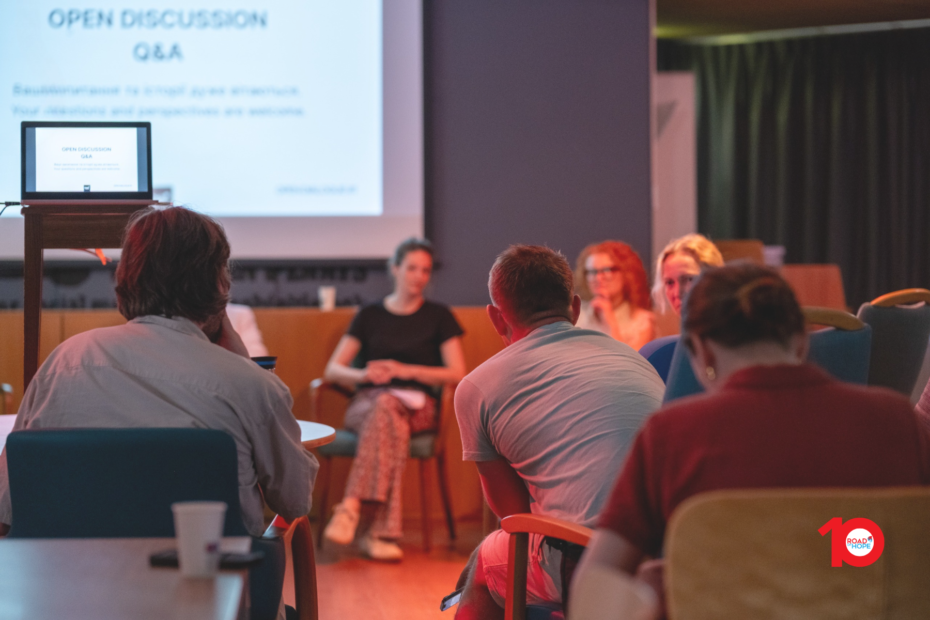
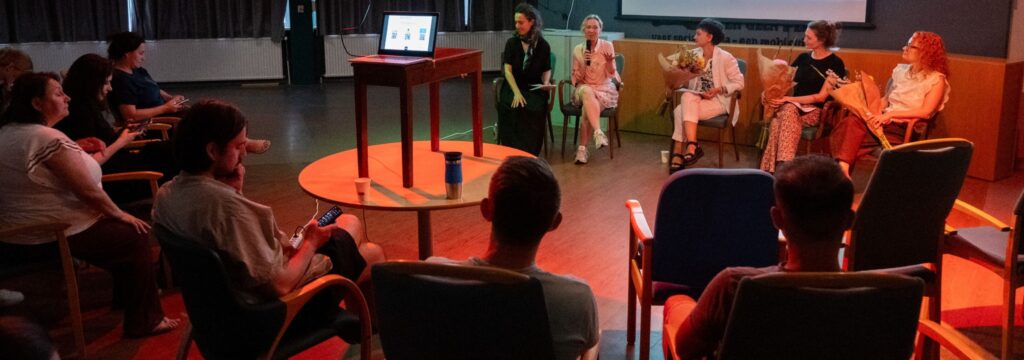
Road of Hope’s Together project held its first Open Dialogue of 2026 in June. The topic of discussion was a practical one for Ukrainian students and parents in the Netherlands: how do you find your place in the Dutch education system?
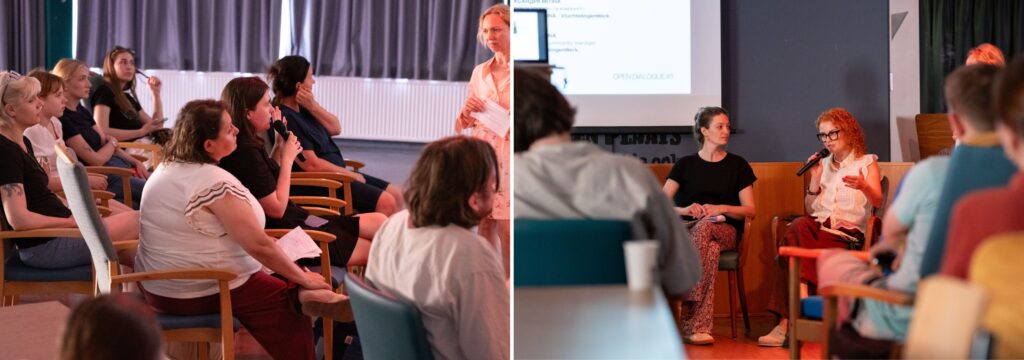
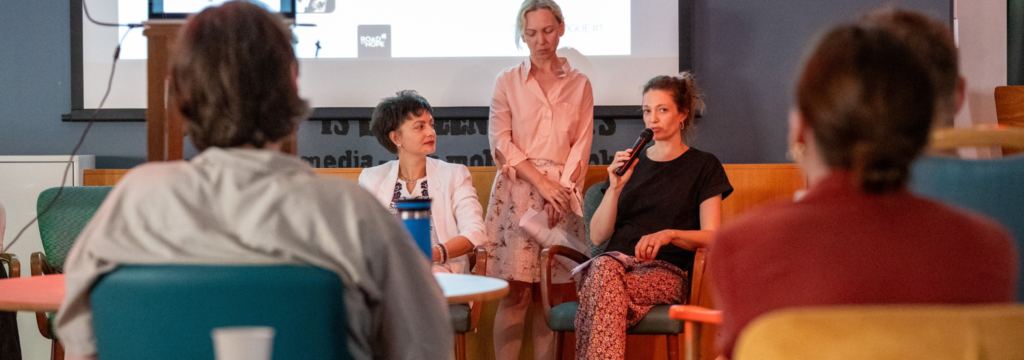
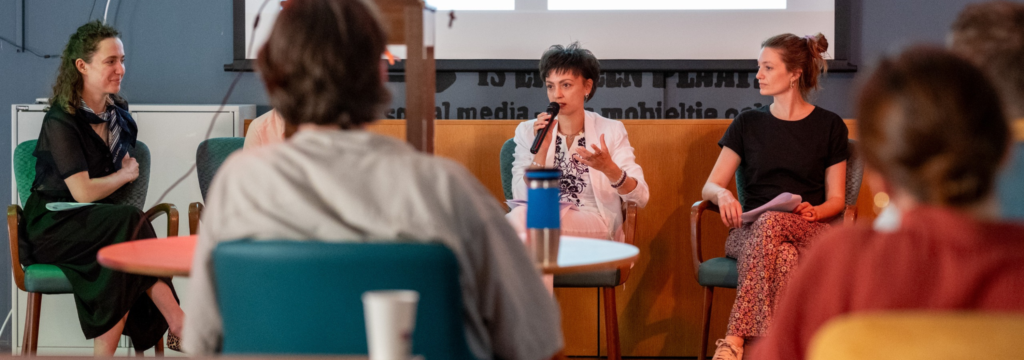
The evening was led by Alina Bielun, who runs Road of Hope’s Together project. Three specialists joined for a panel discussion and answered questions from the audience: Sarah Teppema, a career counsellor at UAF, a Dutch foundation that has helped refugee students find education and work for more than 75 years; Marina Rozhniatovska, a psychologist at the OPORA Foundation, which gives mental-health support to Ukrainian children and teenagers; and Alexandra Mitina, who leads projects at LUNA, part of VluchtelingenWerk, the Dutch Council for Refugees, where she informs Ukrainians growing up abroad.
Adapting to Dutch education
For Ukrainian teenagers, the move to the Netherlands changes everything about their schooling. Many had clear plans at home: subjects they liked and a path they were on. Here, they have to start over. A lot of them follow two school systems at the same time, a Dutch one and a Ukrainian one, so they do not fall behind in either. Language barriers make things even harder. It can be difficult to make friends when you do not speak Dutch well, and some students get teased for their accent.
Adaptation takes time. “For some it is quicker, for others it takes longer,” said Mitina, “but either way, it is long-term process.” Depression is common in the first months.
Pressure from family can make things even harder. In Ukraine, a university place is often seen as a sign of success, and parents who have paid for their children’s education expect results. “It is considered a personal failure if you don’t get into university,” Rozhniatovska said. The living situation makes it harder still: many students are housed in cramped, shared accommodation with little quiet space to study.
The Dutch system also asks a lot of students, who are expected to find their own way. “From the street to the shop to the university, you have to search, ask questions, take the initiative,” Mitina said. Her advice was to volunteer, which is how many people in the Netherlands meet others and find work.
Dutch schools are not always ready for these students. Families often arrive without a clear idea of how Dutch education is structured, what each level leads to, or what is expected of a student, and the schools and teachers do little to explain it. Students and teachers at the event said schools could help far more by setting this out clearly from the start.
There are practical hurdles, too. A diploma from Ukraine has to be checked before it counts by organisations like IDW or Nuffic, which compare it with Dutch qualifications. And because Ukrainians on temporary protection cannot get Dutch student finance, they have to pay for their studies themselves.
The cost of higher education
For students who want to go to university or HBO (universities of applied sciences), money is the biggest problem. The Netherlands has two tuition rates. Dutch and EU students pay the low “statutory” fee, about €2,700 a year. Everyone else pays the “institutional” fee, which is much higher, ranging from about €11,000 to more than €20,000 a year. Ukrainians on temporary protection count as non-EU students, so they pay the high fee. For most families, that makes a degree too expensive.
Teppema explained that UAF has been trying to change the situation. Since 2023, the organisation has lobbied politicians in The Hague and spoken directly to universities, asking them to charge Ukrainian students the low statutory fee. Some universities have agreed to charge the lower fees to Ukrainian students who are part of the UAF programme. But each university has to pay the difference from its own budget. This year, just twenty of forty-one higher education institutions (HBO and universities) took part in the UAF programme. “Every year, we have to make these agreements again,” Teppema said. A student who gets the lower fee one year cannot count on it the next.
UAF can only help a limited number of people. For the students it supports, besides ensuring the statutory fee, the organisation helps with entry exams, IELTS tests, and study advice. This year it had 250 places in higher education and, for the first time, 100 in MBO. Applications for next year are closed, and should open again around February 2027.
Panelists also discussed other options for students who graduate high school and cannot afford to pay the high tuition fees right away. Volunteering builds skills and can lead to a job, and many people here work first and study later, or do both. Mitina mentioned Codam, a free programme for people who want to work in IT. One student shared her own tip: the Invisible University for Ukraine, a free programme based in Budapest, which offers mentorship, English practice, and useful contacts for international study.
Panelists agreed that MBO is also worth considering. It is cheaper and shorter, fits more easily around a job, and still gives a valuable diploma. Teppema gave an example: one student has a Ukrainian bachelor’s degree but is now doing an MBO course to become a store manager, which means a higher salary and the chance of a master’s later. She is often impressed by the students she works with. “They have amazing CVs at nineteen,” she said. “I often wonder when they sleep.”
Living with an uncertain future
Figuring out what to do after high school is difficult for any student, but it can seem impossible for Ukrainians who don’t know what the future holds for them. Depending on changing Dutch and EU decisions about their status, a family may stay in the Netherlands, return to Ukraine, or move somewhere else. This uncertainty affects almost every decision.
Deciding which language to master is one example. If the plan is higher education, in the Netherlands or abroad, English matters most, because it is the language of academic instruction. If the family expects to stay, good Dutch is essential, above all for MBO (vocational training) or for finding a job. If they expect to return to Ukraine, then Ukrainian and a Ukrainian education matter most. Most families cannot say which future is theirs, so they try to prepare for all of them at once. That is exhausting, it costs time and money they do not have, and the rules about their status could still change.
Considering all of these compounding stress factors, Rozhniatovska advises that well-being is a shared job. Her advice to students was simple. Be honest with yourself about how you feel. Talk to friends and classmates who can give you feedback. Eat and sleep well. Break big goals into small steps, so you can feel that you are making progress. She also spoke about culture. “It is important to ask for help,” she said. “We are not used to that.”
A mother in the audience gave an example from her own life. Her 21-year-old son had studied aviation in Delft and kept up his studies in Ukraine at the same time. He stopped because of the cost and the long daily journey, and now he works instead. “He is already 21,” she said. “What can I tell him?” Rozhniatovska said she should turn the question around: ask him how you can help, instead of giving him a solution. Sometimes, the best help a parent can give is to take the pressure off.
The next Open Dialogue is on 21 August. There, the discussion about uncertainty and changing rules and regulations will continue, as experts weigh in on the question “What comes after March 2027?”.