
By Rik Moors
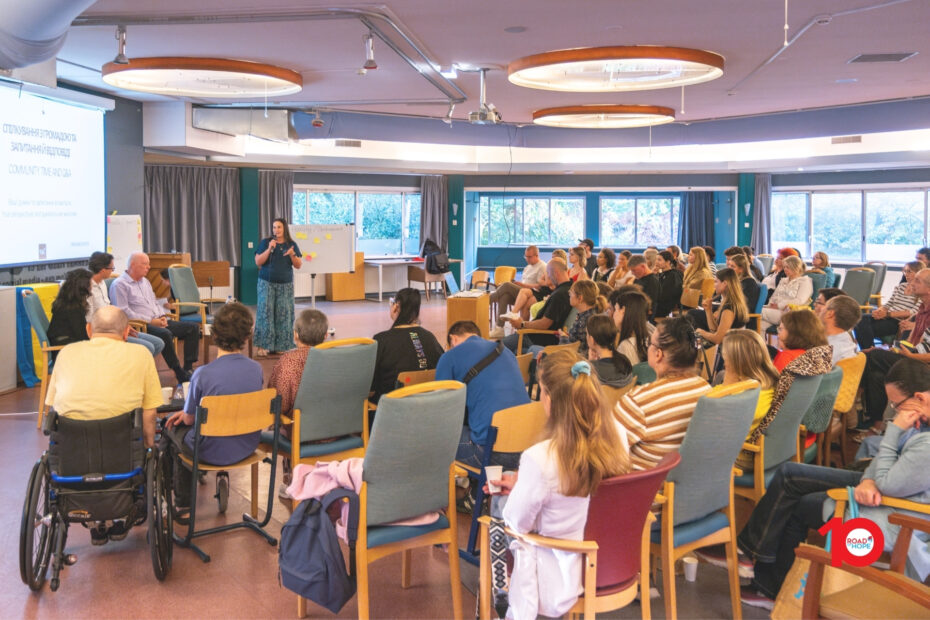
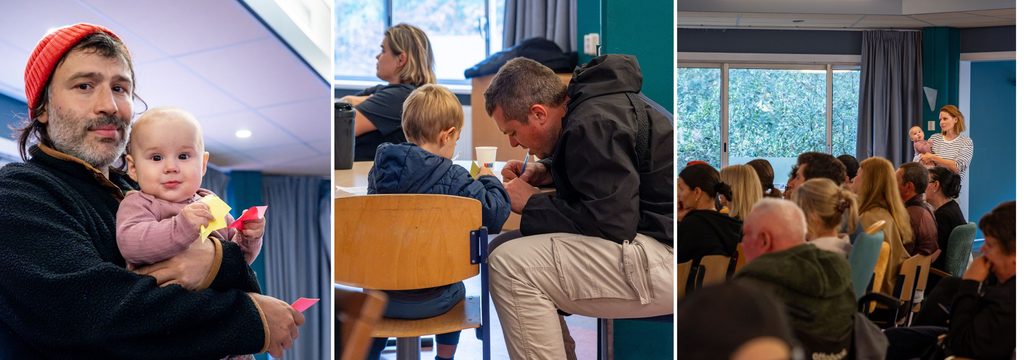
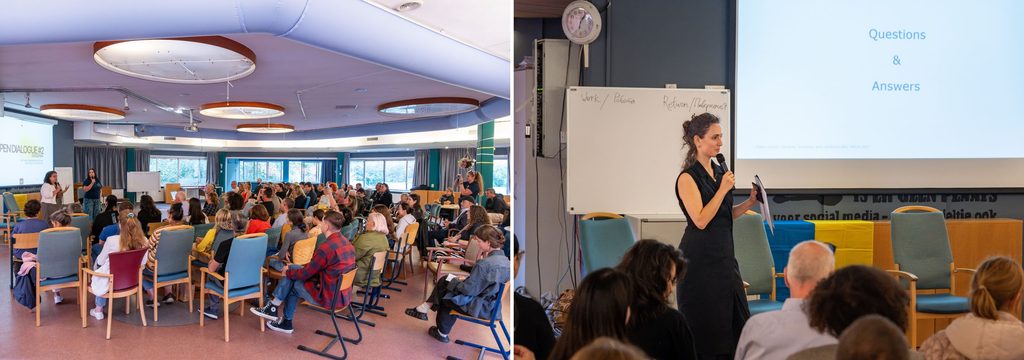
On August 21, 2026, Road of Hope hosted a highly interactive public dialogue in a reception location for displaced Ukrainians in Amerbos, Amsterdam-Noord. The event brought together residents, Ukrainian community and government representatives to discuss the future of temporary protection in the Netherlands.
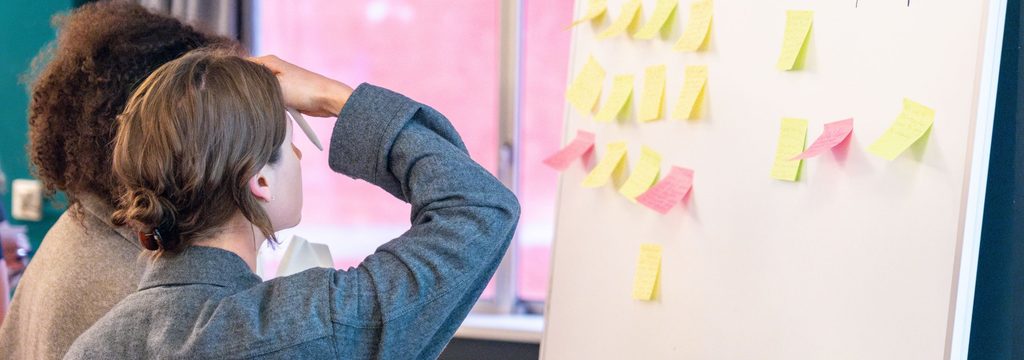
While sharing soup and drinks, attendees actively participated by writing their most pressing questions on sticky notes and placing them on thematic boards. These boards were organized around pressing topics including Education, Work, Return, and Healthcare.
The main purpose of the evening was for Dutch government representatives, led by Erik Klaver from the Ministry of Justice, to share the current state of proposed plans for the period after temporary protection ends, to answer questions, and to receive direct feedback from the Ukrainian community in Amsterdam.
The European Temporary Protection Directive (TPD) that offers Ukrainians protection without granting them full rights and responsibilities has been extended until March 4, 2028. The Dutch government’s proposed plan is to introduce a special three-year transitional document that would start immediately from that moment, providing a legal bridge for Ukrainians to stay, work, and study in the country. While this broad timeline is set, the discussions and the sticky-note boards showed that many critical details and daily realities remain highly complex and unresolved.
Return and reconstruction as a priority
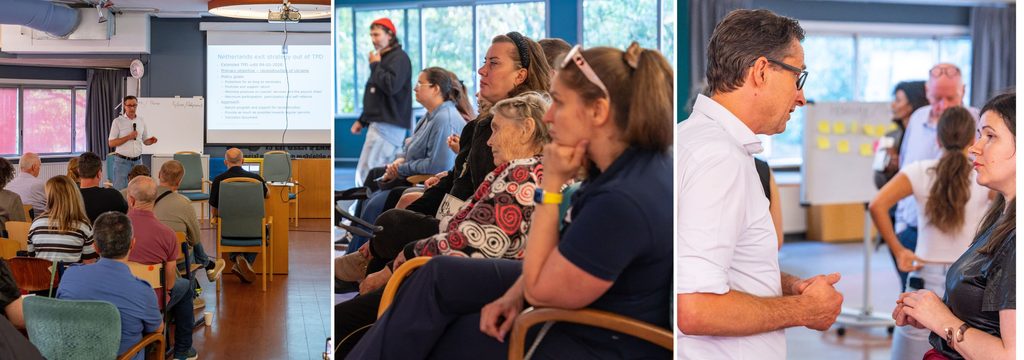
During the opening presentation, Klaver explained that the Netherlands is developing its strategy in cooperation with other EU member states to prevent sudden movements of refugees between countries. The main official objective of the Dutch government is to support the eventual reconstruction of Ukraine and promoting voluntary return once safety is restored.
However, this priority was challenged by critical notes left by attendees on the boards. One note questioned why the government is focusing so heavily on return and reconstruction when long-term integration seems far more important for the many Ukrainians who have already built lives, learned the culture, and established roots here over several years. Another asked why the Dutch government is only planning to offer better, more structured Dutch language learning opportunities after March 2028, rather than investing in language skills right now to help people secure higher-qualified work sooner.
A three-point transition plan
The proposed transition strategy is built on a three-point approach to manage the post-2028 period:
- A Return and Reconstruction Programme: Offering practical help, including travel arrangements and financial support, through the Repatriation and Departure Service (DT&V) for those wishing to return.
- Support for Regular Permits: Creating clearer pathways for displaced Ukrainians to transition into standard Dutch residence permits for work, study, or family reunification.
- The Three-Year Transition Permit: Providing a temporary fallback document for those who do not qualify for regular permits, granting them the right to live, work, and study in the Netherlands for three years starting immediately in March 2028.
The three-year transition permit is proposed to prevent a system collapse at the Immigration and Naturalisation Service (IND). Currently, all asylum requests from Ukrainians are legally frozen. If the TPD ends without a transitional permit, the IND expects to receive 150,000 asylum applications in 2028. Klaver explained that it would take the IND about 20 years to process this backlog. During this time, applicants would have to live in temporary asylum centers and would face severe travel restrictions.
To prevent this, the transition permit offers an immediate legal pathway. However, there is a strict condition: applicants must formally cancel any active asylum requests to receive the three-year document. This requirement raised a difficult question from the audience. Can an LGBTQ+ individual apply for asylum and still receive the transition permit? Representatives confirmed that while seeking asylum is a basic human right, the two pathways cannot be combined. Applicants must choose one or the other; if they choose the asylum procedure, they cannot receive the transition permit.
Work
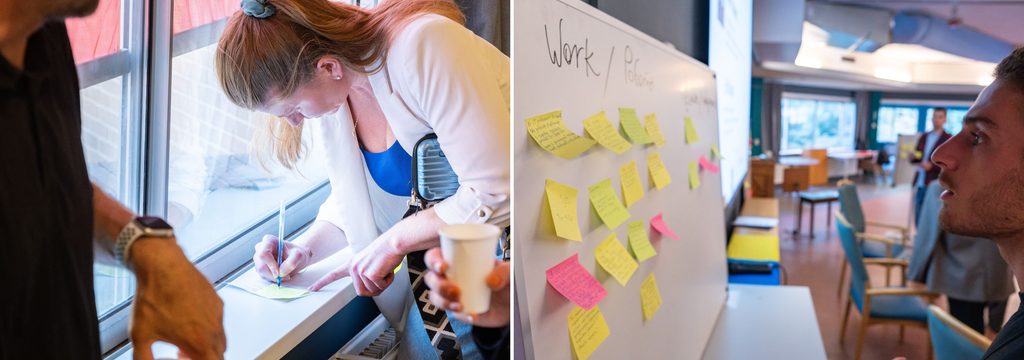
The transition to the standard Dutch system will bring major changes to income and employment support.
Once the TPD expires, the current emergency living allowance (leefgeld) will stop. Ukrainians who cannot work or do not earn enough will transition to standard Dutch social assistance (bijstand). Under standard bijstand rules, any money earned through part-time work is deducted 1-to-1 from the social assistance payment, as the benefit is designed only to lift household income to the national minimum. On a positive note, representatives expect that once the transition permit is officially approved, employers will have the legal certainty needed to offer stable, permanent contracts (vast contract).
However, several concerns remain unresolved in the employment sector. A major question was raised about Ukrainians currently working in low-qualified jobs who are legally blocked from applying for standard Dutch work visas. Representatives admitted this is a significant issue that the government still needs to solve during the transition period.
Other attendees asked about refugees over the age of 60, who face severe age discrimination when looking for work. Currently, local municipalities (gemeentes) offer little specialized help, often directing older job seekers exclusively toward heavy, low-qualified physical labor. The government has not yet proposed a solution for this group, acknowledging it is a difficult issue that also affects Dutch citizens.
Support for elderly Ukrainians at retirement age is also a major concern. Because they have not paid taxes into the Dutch pension system, they will not qualify for standard state pensions (AOW). Instead, they must rely on the bijstand system for income support.
Healthcare
The current RMO system, where the state fully covers medical bills for asylum seekers, will no longer apply to those on a transition permit. Ukrainians will need to purchase standard private Dutch health insurance and pay monthly premiums. Those with low incomes can apply for government healthcare subsidies (toeslag). While standard support systems for chronic care and long-term needs, such as dementia, will be fully accessible through the standard Dutch system, other healthcare and vulnerability policies are less clear.
For example, Ukrainian disability certificates are not automatically recognized in the Netherlands. To receive municipal disability support, individuals must go through a complete medical reassessment by local Dutch authorities, a process that is highly fragmented and varies by municipality.
Another major hurdle is diploma recognition for healthcare and pharmacy professionals. Representatives admitted the government has struggled since the start of the war to speed up the accreditation of Ukrainian degrees, citing differences in medical training standards and language barriers as unresolved challenges.
Education
One of the most welcomed proposals involves higher education. Currently, Ukrainian university students are treated as foreign nationals and must pay very high international tuition fees. After March 2028, they will pay the same domestic rates as Dutch citizens, and Parliament is currently looking at initiatives to introduce this change even sooner. Primary and secondary school will remain completely free.
One audience member pointed out that switching to a regular student visa before 2028 is very difficult for many non-EU citizens because it requires proof of €20,000 in personal funds. The proposed plan also lacks tailored visa pathways or protections for specific professional groups, such as artists.
Other educational questions remain open-ended. It is currently very difficult for Ukrainian students in the Netherlands to participate in international exchange programs outside the EU, and the government could not confirm whether the transition permit will resolve these travel and visa limitations. There is also no agreement yet on whether the school years Ukrainian children spend in Dutch schools will be officially recognized by educational authorities if they return to Ukraine, as this depends on complex, unresolved negotiations between the EU and Ukraine.
Housing
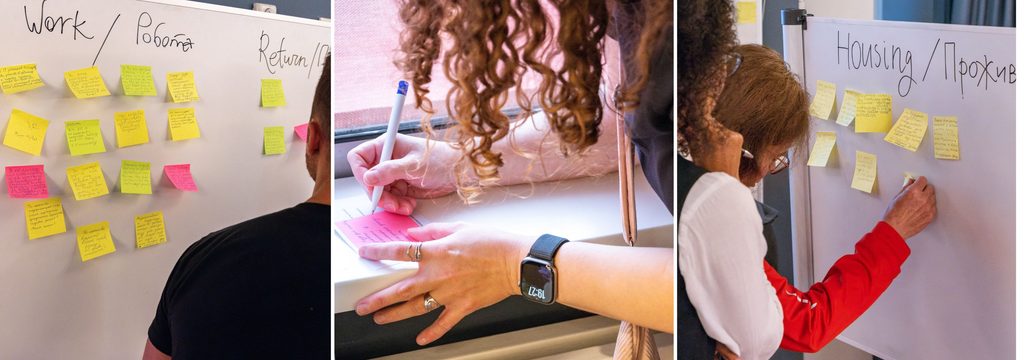
Perhaps the most stressful topic of the evening was housing. Once the TPD ends, the automatic right to emergency municipal shelter ends as well. While low-income refugees can apply for social housing and rent subsidies (huurtoeslag), they have no priority and will be placed at the back of standard waiting lists that already span several years. Some Dutch municipalities are actively preparing (social) housing solutions or are more open to welcoming Ukrainian residents, as housing policies are decided locally and remain highly fragmented. But no list of such municipalities exists, and the representatives were not ready to commit to compiling one.
Ukrainians looking to buy a home also face difficulties. Dutch banks are hesitant to offer mortgages to holders of temporary transition permits. The government is discussing this with financial institutions but has no concrete solutions yet.
Naturalisation
Gaining Dutch citizenship requires five years of continuous residency. The government confirmed that years spent in the Netherlands under the TPD will not count toward these five years. Only years spent holding the proposed three-year transition permit will count. Representatives acknowledged the deep disappointment in the room upon hearing this. Klaver promised to convey this community frustration directly to policymakers in The Hague.
A question was raised about children born in the Netherlands: Is it possible for them to obtain a Dutch passport under special, simplified rules, since they are unlikely to return to Ukraine? Klaver explained that standard Dutch legal frameworks apply and that he is not optimistic about politicians changing these rules.
Looking ahead
The Amsterdam dialogue highlighted the many complicated issues that are like to come up after 2028. While the proposed three-year transition document provides a clear framework to prevent an immediate asylum crisis, many specific issues regarding elderly support, professional accreditation, and housing remain unanswered.
The feedback gathered from the Amsterdam boards will be used to refine and improve the transition proposals before the next session in Maastricht.
If you are a Ukrainian refugee living in the Netherlands and have questions about these upcoming policy changes, housing, work, or regular permits, please remember that you do not have to navigate this transition alone. Road of Hope is here to support you.
“Together” is the Road of Hope project supporting Ukrainians in the Netherlands, creating opportunities for information-sharing, connection and empowerment. Alongside Open Dialogue, the project organises community activities, workshops and other initiatives that respond to the needs and questions of Ukrainians living in temporary displacement.
If you have questions about Together, upcoming activities or future Open Dialogues, you can contact the team at together@roadofhope.org
For the latest official information on the topic of IND, please consult:
Government of the Netherlands – Long-term policy on asylum support for refugees from Ukraine